
The lack of death literacy in Singapore highlights gaps in knowledge and skills that could affect individuals, families and caregivers.
======

Fewer than one in 3 in Singapore knows how to support dying person: Study by hospice council
Get ST's newsletters delivered to your inbox
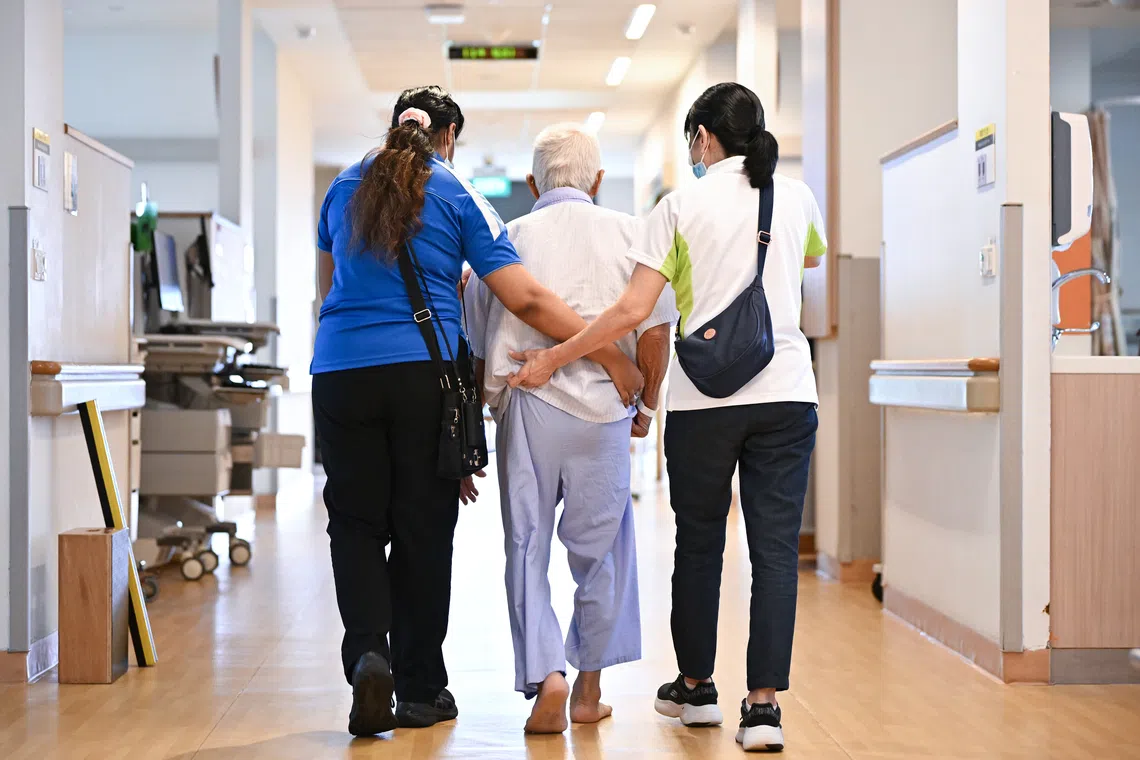
The lack of death literacy in Singapore highlights gaps in knowledge and skills that could affect individuals, families and caregivers.
ST PHOTO: LIM YAOHUI
Follow topic:
- Singapore's Death Literacy Index is 5.66, revealing gaps in end-of-life knowledge and skills, impacting families and the care system.
- SHC will launch a grant for GPs to access palliative care training by 2026, enhancing their end-of-life support for patients.
- The study found that two in five people report struggling to talk to a newly bereaved person, or to talk about death to a child.
AI generated
Published Sep 25, 2025, 06:35 PM
Updated Sep 26, 2025, 05:32 AM
SINGAPORE - Fewer than one in three people in Singapore knows how to navigate the healthcare system to support a dying person, and only one in four knows the regulations involved with dying at home.
These were among the findings of the Singapore Death Literacy Index study commissioned by the Singapore Hospice Council (SHC) and released on Sept 25.
The study also found that two in five people said they would struggle to talk to a newly bereaved person or to a child about death.
On their knowledge of hands-on care for the terminally ill, about half of the respondents were comfortable feeding a person, but only one in three said the same about bathing someone.
The lack of death literacy in Singapore highlights gaps in knowledge and skills that could affect individuals, families and caregivers, as well as the broader care system, as Singapore inches towards becoming a super-aged society, SHC said in a statement on Sept 25.
By 2026, Singapore will be a super-aged society, with more than one in five citizens aged 65 and above.
More than 1,000 people responded to the study, which was commissioned to measure how well people understand and are able to act on end-of-life and death care options.
Top stories
Swipe. Select. Stay informed.
Singapore
Several mosques received suspicious parcels with meat; Shanmugam warns ‘this is playing with fire’
Singapore
Yishun knife attack: Neighbour charged with murdering mother of 2

Singapore
Govt refreshing approach to tackling inequality, reforming education: Desmond Lee
Singapore
10 taken to hospital after Ang Mo Kio HDB block fire involving personal mobility aid; 90 evacuated

Singapore
First JRL train arrives in Singapore; has wider doors, smaller carriages: LTA

Singapore
Recap: Target resource gaps in enrichment, culture to address inequalities, say MPs in debate
Business
MAS to warn 5 content creators in S’pore who may have given financial advice without a licence
SHC also hopes to gain insights that can guide policymaking and inform better end-of-life planning in Singapore.
More than half of the respondents said they felt confident talking to a healthcare professional about support for a dying person.
To build on the important role that primary care providers can play in end-of-life conversations and care, SHC will start a $50,000 training and development grant for general practitioners to access palliative care training so they can better support patients.
SHC will also work with its member organisations to provide a structured palliative care training programme for GPs and polyclinic doctors by 2026.
It urged medical practitioners to join the Primary Care Palliative Champions Telegram channel, which provides a real-time line to palliative care specialists for text-based support.
Dr Mok Boon Rui, a GP, said the training and development grant and other resources will offer essential support for GPs like himself to foster important conversations and better support patients and their caregivers.
The Government has emphasised the importance of end-of-life planning in recent years, launching a nationwide campaign in July 2023 to raise awareness of legacy planning tools like lasting power of attorney (LPA), advance care plans, wills and Central Provident Fund nominations.
More than 350,000 Singaporeans have made their LPAs as at Aug 15. The document allows people to appoint a trusted person, usually a family member, to take charge of matters like personal welfare, property and finances if they lose mental capacity.
In the Death Literacy Index study carried out by Temasek Polytechnic, Singapore had an overall score of 5.66, indicating a moderate level of death literacy. The score takes into account respondents’ knowledge across areas such as accessing help, hands-on care and factual information.
Australia scored 4.7 in 2019, while the UK scored 4.76 in 2022.
Dr Wu Huei Yaw, honorary secretary of SHC, said: “As doctors, we see first-hand how families struggle when conversations about death are delayed or avoided.
“Improving death literacy would help patients and families make informed end-of-life decisions, ease emotional burden and allow care to be more aligned with their wishes.”
Syarafana Shafeeq is a social affairs journalist at The Straits Times.
Read the full story and more
Want more exclusives, sharp insights into what’s happening at home and abroad? Subscribe now.
- Access all subscriber-only content on ST app and straitstimes.com
- Easy access any time via ST app on one mobile device.
- E-paper with 2-week archive so you won’t miss out on content that matters to you
Enjoy these subscriber benefits


 Posts
Posts


No comments:
Post a Comment