Rising malnutrition among Singapore seniors: How can you prevent this condition?
Rising malnutrition among Singapore seniors: How can you prevent this condition?
Get ST's newsletters delivered to your inbox
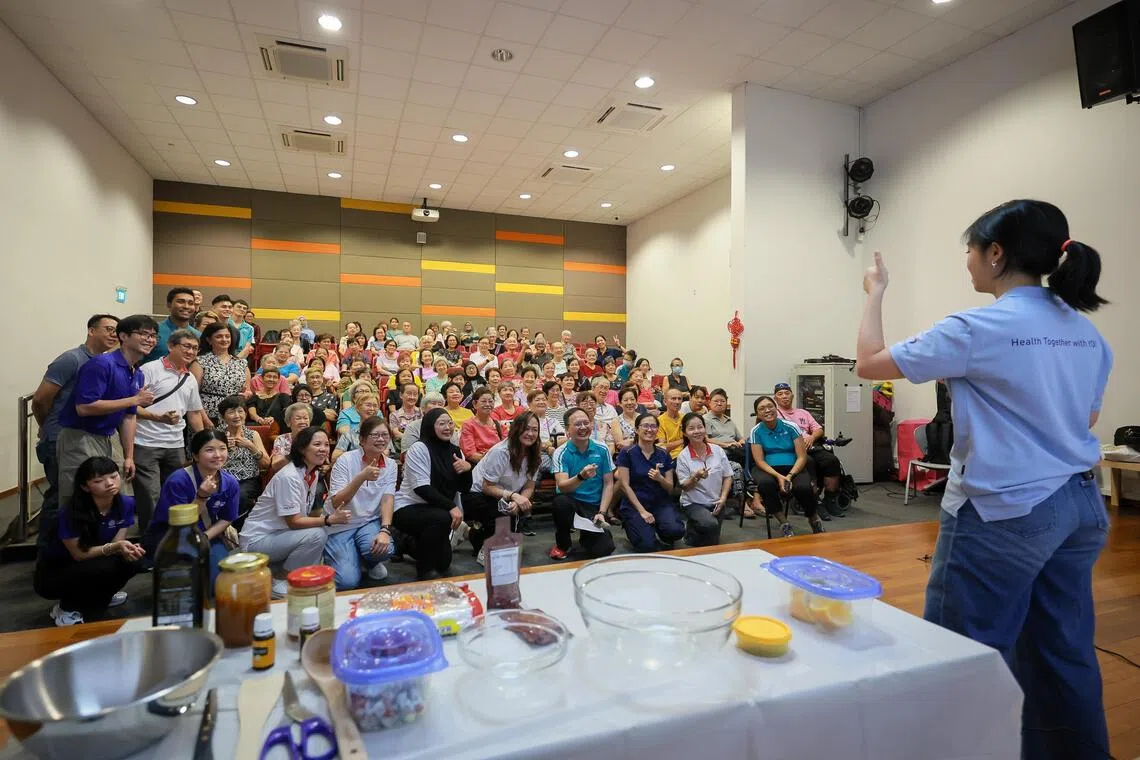
Seniors attending a demonstration on how to make a healthy dressing for salad at the Eat Smart, Age Strong event on Oct 8.
ST PHOTO: GAVIN FOO
Follow topic:
- Singapore faces rising malnutrition among seniors, with many lacking daily protein.
- Malnutrition in seniors leads to muscle loss, cognitive decline, frailty, and increased risk of falls.
- Seniors should eat protein-rich foods, stay hydrated, and have balanced meals.
AI generated
Published Oct 21, 2025, 03:00 PM
Updated Oct 21, 2025, 07:31 PM
SINGAPORE - An increasing number of seniors are
according to healthcare providers here.Malnutrition is broadly defined as a deficiency or imbalance in one’s intake of nutrients, and healthcare clusters here have found that older adults, especially those who are more frail and have to be hospitalised, are at greater risk of it.
The Straits Times looks at what you need to do to keep malnutrition at bay, and to maintain a healthy diet into old age.
Q: Why is malnutrition dangerous, especially for seniors?
Malnutrition can lead to muscle loss, cognitive impairment, increased frailty and a greater risk of falls and fractures, said Associate Professor Reshma Merchant, head and senior consultant of National University Hospital’s division of geriatric medicine.
NHG Health’s Adjunct Associate Professor Lim Yen Peng said inadequate intake of proteins, vitamins and minerals can also slow recovery from illnesses, affect mood and memory, and ultimately affect a person’s quality of life and independence.
The risk increases as you age, as older adults require a higher protein intake to maintain muscle mass, even as ageing is often accompanied by reduced appetite, altered taste and feeling full more quickly.
The 2022 National Nutrition Survey found that one in two adults aged 50 to 69 did not meet the recommended intake of 20g to 30g of protein per meal – the equivalent of a palm-size piece of chicken breast.
Top stories
Swipe. Select. Stay informed.

Singapore
S’pore Govt to share classified threat intelligence with critical sectors to beef up national security

Singapore
Largest industrial district cooling system begins operations in Ang Mo Kio

Singapore
Judge acquits three women accused of organising procession outside Istana

Singapore
‘Not a ship, but a mothership’: Mindef launches first multi-role combat vessel

Asia
Malaysia school stabbing: 14-year-old suspect to be charged with murder

Singapore
Singapore will continue to deepen strong ties with Japan under new premier: PM Wong
Asia
Turning rubbish into electricity: Indonesia to build huge incinerators to shrink landfill needs
Q: Are there simple ways I can ensure a balanced diet?
A visual way to check if your meal is balanced is to use the Health Promotion Board’s My Healthy Plate as a guide.
This means half the plate should be filled with vegetables and fruit, a quarter with whole grains such as brown rice or rolled oats, and the remaining quarter plate with proteins such as poultry, tofu, eggs and nuts.
By mixing and matching familiar local foods such as brown rice porridge, steamed chicken or fish, braised peanuts, eggs, vegetables and fruit, you can enjoy tasty meals that also meet your nutritional needs.
Water is also important as seniors are at a higher risk of dehydration due to a diminished sense of thirst, hot weather and potential side effects of medications.
Staying hydrated can maintain cognitive function and physical health. In addition to fluid from food, it is recommended to drink six to eight glasses of fluids a day.
Q: Why is protein so important?
Protein is important to build and repair your body’s cells. It is also needed to build and maintain muscle mass, and should be complemented with resistance exercise.
As you age, your body loses muscle more quickly. For those aged 50 and above, experts recommend about 1.2g of protein per kg of body weight. On average, the protein requirements should be 20g to 30g per meal.
Seniors should try to include one source of protein such as lean meat, poultry, fish, eggs, dairy, or soya with each meal. Instead of fulfilling the daily protein requirement all in one meal, they should spread it evenly across their meals to stimulate muscle protein synthesis throughout the day.
Other good sources of protein include Greek yogurt, cottage cheese, canned sardines and tuna, and legumes such as lentils, black beans, chickpeas and edamame.
Q: What other nutrients do seniors often lack?
Besides protein, their diets often lack calcium, vitamin D, vitamin B12 and Omega-3 fats.
Calcium is needed to strengthen bones and can be found in milk, sardines, cheese, yogurt or fortified soya milk.
Vitamin D, which your body produces when exposed to the sun, helps absorb calcium. It is found in eggs and fish. Vitamin B12 maintains nerves and red blood cells, and can be found in fish, chicken and fortified cereals.
Omega-3 from oily fish like salmon or sardines protects the heart.
Q: How do I prepare a healthier meal at home?
Opt for healthier options for your carbohydrates such as brown rice or oats, and boost nutrition by adding tofu to soups and stir-fries, egg to bee hoon, or additional milk or soya milk powder to hot beverages.
To tackle diminished taste and smell, use herbs and spices – including garlic, coriander and ginger – as well as lemon or lime to flavour dishes, rather than salt and sugar.
Small adjustments, such as consuming less fried food, less salt and less sugary drinks, go a long way.
Preparing large batches of soups and stews and then freezing individual portions for easy reheating can solve the problem of cooking for one feeling burdensome, and reduce over-reliance on hawker food.
Q: How can I eat better if I have chewing difficulty or a poor appetite?
You can go for softer textured food like porridge, soups, tofu, scrambled eggs or minced meat.
Rather than eat three large meals, you can consider having four to six smaller meals and snacks spaced throughout the day. This approach makes it easier to maintain adequate nutrition without overwhelming one’s appetite.
Staying physically active and socially engaged during meal times can also boost appetite.
Q: Are vitamin and mineral supplements necessary?
Whole foods are preferred. However, if you cannot meet your nutritional needs through food alone, a doctor or dietitian may advise additional supplements. These are especially useful if you have specific nutrient deficiencies, or if you are recovering from an illness or at risk of malnutrition.
More information can be found online, such as at HealthHub’s resources on
Chin Soo Fang is senior correspondent at The Straits Times, covering a wide range of topics including community, politics, social issues, consumer, culture and heritage.
Read the full story and more
Want more exclusives, sharp insights into what’s happening at home and abroad? Subscribe now.
- Access all subscriber-only content on ST app and straitstimes.com
- Easy access any time via ST app on one mobile device.
- E-paper with 2-week archive so you won’t miss out on content that matters to you
Enjoy these subscriber benefits


 Posts
Posts


No comments:
Post a Comment