When I was a novice teacher, I remember a head of department telling me that classroom teaching was the “bread and butter” of our profession. Thus, it would factor the most during our appraisal and performance ranking.
But teaching is such a small aspect of the job, and is increasingly getting smaller. The numbers say so.
According to the Teaching and Learning International Survey (Talis) released on Oct 7, Singapore teachers spent 17.7 hours a week on actual teaching in 2024, quite similar to the 18 hours reported in 2018.
However, their overall working hours rose from an average of 46 hours a week to 47.3.
If you do the maths, it would mean that a teacher spends 62.5 per cent of their time, or 29.6 hours a week, on non-teaching tasks.
How can only 37.5 per cent of what you do at work factor the most for a performance review?
As a beginning teacher in 2011, showcasing my best in the classroom while being pulled in many different directions outside the classroom got overwhelming.
I lasted almost 13 years in the profession, but I fear young teachers these days will quit much earlier than that.
Younger teachers may exit earlier
Some 40 per cent of teachers under the age of 30 said they intend to leave the profession within the next five years.
This may be no cause for worry.
After all, it is a drop of 9 percentage points from 2018, when 49 per cent of young teachers felt this way. Also, the average annual resignation rate of teachers has held steady at 2 per cent to 3 per cent – lower than other areas in the civil service.
One could deduce that the system is resilient. Besides, intent does not necessarily translate into action.
But intentions matter.
When more than a third of younger educators say they are already contemplating exit, it signals a deeper strain.
They may not leave right when their bond ends. But when the desire to stay wanes this early, the fraternity loses something very vital from young blood – eagerness, energy, creativity and the sense of a calling that draws good teachers to this work.
Satisfaction v stress
The Talis report surfaced something else I found intriguing. Eight in 10 teachers reported being satisfied with their jobs. However, 63 per cent said that at work, they experience stress “a lot” or “quite a bit”.
If you ask a teacher to explain this, they might say that while moulding the future of our nation gives them great satisfaction, stress is a big and unavoidable part of the job.
To be fair, which job is stress-free?
That being said, we cannot use it to gloss over how the workload of a teacher has exponentially expanded with nothing being off-loaded for balance.
Teachers have always worn many hats, but those hats have multiplied. Every time a new initiative is rolled out by the Ministry of Education (MOE), it adds to a teacher’s workload.
New initiatives, new things to do
The Student Learning Space (SLS) online platform was rolled out to all schools in 2018.
While it is a great medium for collaborative and self-directed learning, and is a rich repository of learning resources, teachers have to now integrate this alongside the hard copy textbooks and resources a syllabus already provides.
This means time taken to come up with lessons on SLS, update lesson plans and monitor student participation on the platform.
When personal learning devices were issued to all secondary school students from 2021, the intent was to support teaching and learning in a digital environment. It was especially useful for home-based learning, when schools were closed during the circuit-breaker measures because of the Covid-19 pandemic.
As a result, teachers had to redesign lesson plans and learning materials when students returned to the classrooms to ensure effective use of the devices. This also meant policing how students used them during lessons, to ensure they were not getting distracted.
To move away from an overemphasis on examinations and grades, mid-year examinations were abolished in 2023. Yes, this meant no exam script marking, but what it also entailed was lessons going on as per normal, instead of fewer teachers being deployed for invigilation duties.
In efforts to move away from streaming labels – Express, Normal Academic and Normal Technical – and create flexible learning pathways for students, full subject-based banding was rolled out to all schools by 2024.
Students are now also placed in mixed form classes, where they learn alongside peers with different academic abilities and take a common set of subjects – art, character and citizenship education, design and technology, and physical education.
To accommodate this change, teachers have to redesign teaching materials and assignments to suit the different needs of students in a mixed class.
Because of timetabling and venue constraints, schools have to deploy more teachers to teach subjects at each level.
The long digital walk
The MOE has been introducing apps and measures to reduce teachers’ workloads. While they do cut down menial administrative tasks like the dissemination and collection of consent forms, they do not make an impactful dent on overall working hours.
For example, the Parents Gateway mobile app was launched in 2019 as a way to simplify administrative tasks pertaining to parent communication. But how much time a week does this really save?
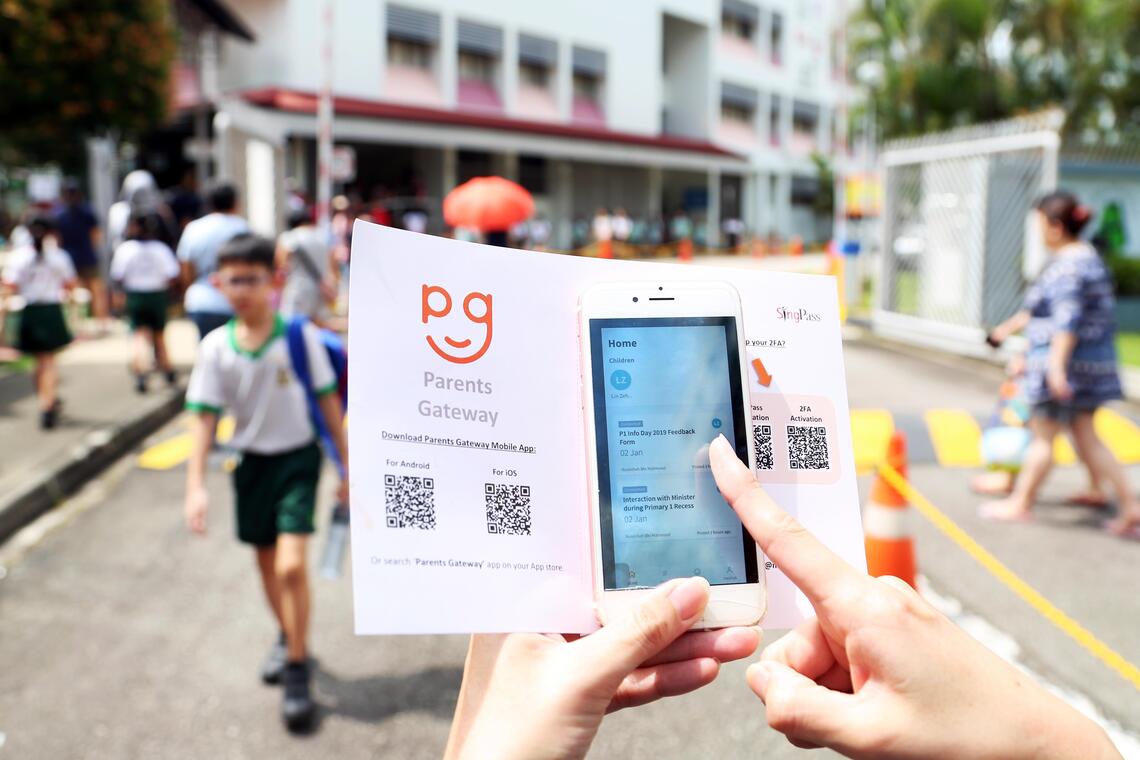
Teachers still have to craft letters and upload them onto the platform. Instead of physically collecting forms, they still have to monitor provision of consent online.
Five artificial intelligence-powered tools have been introduced on the SLS platform, with one of the objectives being to help teachers with tasks that are time-consuming.
For example, the three learning feedback assistants, launched in 2023, provide students with instant feedback on their mathematics and English assignments. This undoubtedly saves time spent on marking.
But teachers still have to spend time experimenting with these tools, learning how to use them and teaching their students how to use them. And not all assignments are graded this way.
More practical solutions needed
Education Minister Desmond Lee announced on Oct 8 that the MOE will find more ways to manage teachers’ workload and “redouble efforts” to attract and retain good educators for a strong education fraternity.
It is encouraging that the ministry recognises the strain teachers face, but the disconnect between well-meaning policies and their actual impact on the ground remains wide.
Younger teachers who are trying to find their footing and achieve work-life balance will need more than piecemeal measures that shave minutes off their day.
We cannot keep applying numerous small band-aids to a larger systemic problem – that too many extras have been heaped onto teachers’ plates, when most joined the profession to just teach.
To attract and retain young teachers, we need to do more than celebrate their adaptability and digital fluency.
Instead of lauding how much more they can take on, let’s consider how much we can take off their plates so that younger teachers can envision a long and fulfilling career.
If we continue to demand that teachers do more, we may soon have too few left to do the one thing that matters most – teach.
- Elisha Tushara is a correspondent at The Straits Times, specialising in Singapore’s education landscape.


 Posts
Posts


No comments:
Post a Comment